Water is scarce. Measure before choosing the remedy.
Drought and a private water system require serious conservation. Before water concerns are used to justify a permanent rental ban, owners should be able to see what BME's meter, pumping, leak, and engineering records actually show.
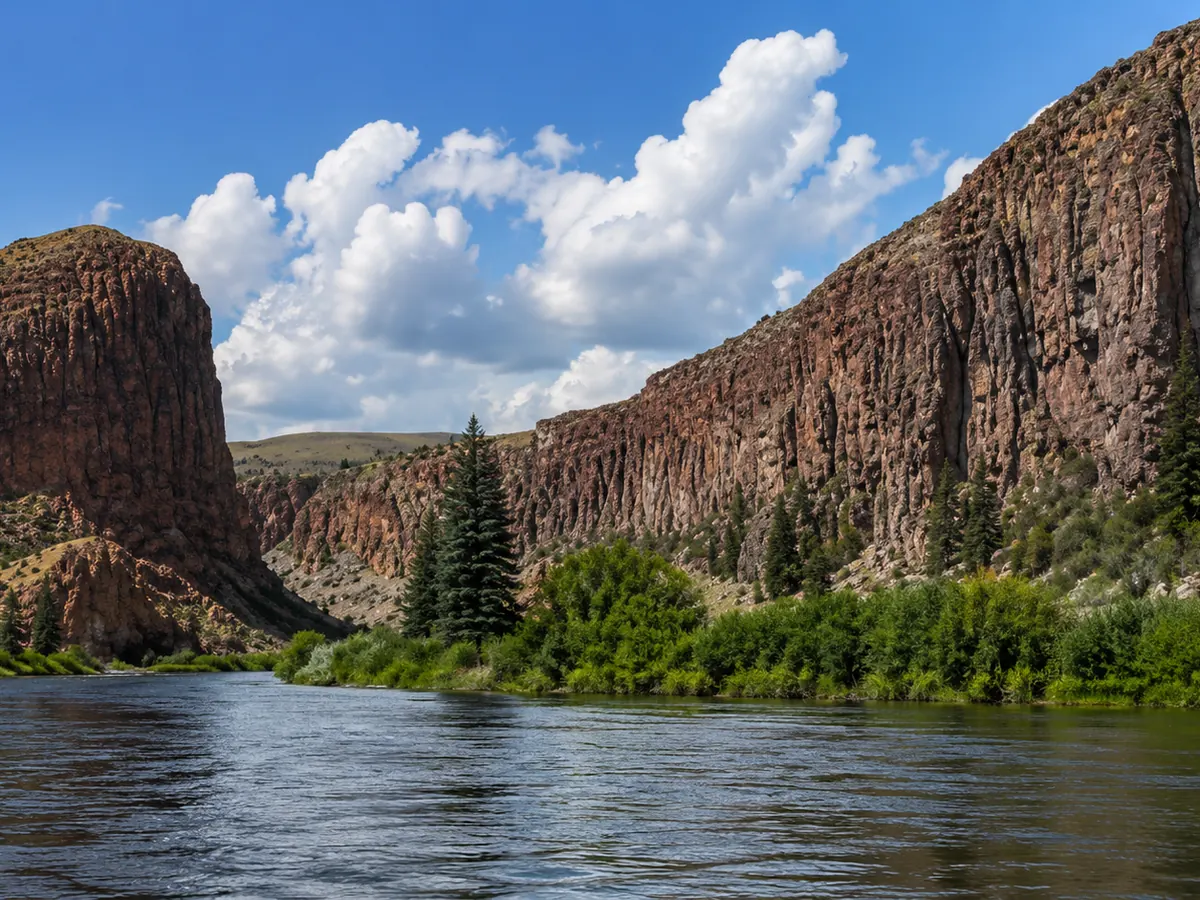 AI-generated illustration, not an archival photograph.
A severe drought, and data BME still needs
The Board is right that regional drought and a finite private system demand planning. On April 9, 2026, NRCS reported Colorado snow-water equivalent at 22% of median; on May 8 it forecast Upper Rio Grande May–July runoff at 30% of median. Those basin conditions are serious, but they do not identify which BME uses are driving demand.
BME's Water Committee has been pursuing water rights, a second well, storage, leak reduction, and modern metering. The available record does not yet isolate rental use from full-time occupancy, seasonal occupancy, irrigation, or leaks. That comparison should be available before selecting a permanent remedy.
Augmentation work reported complete
BME pursued a Colorado water-court proceeding to resolve its augmentation and compliance issues. The board reports that work as complete and approved and authorized execution of an associated Quit Claim deed. Owners should review the final decree, agreements, and permits directly.
A second well, in development
The Water Committee has been working to bring a second well into service alongside ongoing well-permit updates, with the goal of adding redundancy rather than relying on a single source.
Modern metering, already funded
The board approved $38,942 for cellular meter-reading equipment across 45 meters after a vendor study showed 98% cellular coverage reliability. Once installed and operating, it should replace manual reads with more timely data on actual usage.
Capacity identified early, being addressed
An engineering report flagged long-term storage-tank capacity as something to plan for — exactly the kind of forward-looking finding a well-run system is supposed to catch early. It's being tracked as part of the same upgrade program, alongside slip-lining and pressure-reducing-valve maintenance.
The board reports the water-rights compliance work is complete
After more than five years of work involving water court, engineers, water-rights attorneys, title companies, and the water conservation district, the board's May 2026 letter reports that BME's water-rights and augmentation-plan compliance work is complete and approved. The publicly noticed 24CW3008 proceeding corroborates that a substantial water-court process occurred. Owners should still be given the final decree, stipulations, augmentation certificates, and current well permits so the final legal and operational status can be independently verified.
The board's January 2025 letter tied the temporary STR moratorium to "the finalization of merged water rights, renewed permits and updated augmentation agreements." Completion of that work is a reason to revisit the moratorium with current evidence. It does not, by itself, prove either that STRs have no water impact or that a ban is required.
Two pieces of BME's own record matter together: November 2023 minutes summarize an engineering model in which full-buildout demand remained within reported well production and consumptive rights, while the May 2026 letter asks owners to plan conservatively until real meter data is available. Earlier minutes also show that repairing leaks produced major reductions in system pumping. The responsible next step is anonymized meter and incident data—not assumptions about any one category of occupant.
Allocations are per lot and cannot be combined or shared between lots. These approvals are not a guarantee of water availability if the water table drops far enough — residential wells in the area have gone dry in recent years.
Funded transparently, not through emergency spending
The board's 2026 water-system budget allocates $112,500 across slip-lining ($20,000), a new ground storage tank ($20,000), meter-reading equipment ($25,000), meter installation ($20,000), and augmentation-plan legal work ($27,500) — funded by owner assessments and $161,904 in reserves carried over from a prior real-estate sale, not a new emergency assessment. These are substantial planned investments in reliability and measurement during a period of genuine drought risk.
This isn't new. The dedicated water-system assessment — $240 per lot per year, on top of regular dues — has been separately itemized since 2021, held in its own bank account with its own accounting, running for up to eight years. General dues held flat for four years before rising to $300 per lot in 2023 as operating and maintenance costs increased, an increase the board explained in writing to every owner rather than folding it silently into a broader fee hike.
Conservation is everyone's part — owners and renters alike
A well-managed system stays well-managed because everyone using it — full-time resident, second-home owner, or overnight guest — treats it the same way.
For every household
Low-flow fixtures and showerheads, prompt leak repair, and watering landscaping in the early morning or evening all reduce draw on the system without changing anyone's quality of life.
For STR owners
A simple in-unit guide for guests — shorter showers, report leaks immediately, no excessive outdoor water use — costs nothing and supports the same system every resident relies on. Tying occupancy limits to bedroom count keeps water and septic demand proportionate to what a home was built to support.
For the Association
Real-time metering (already funded) makes it possible to catch leaks and unusual usage fast, rather than at the next quarterly read — benefiting every household on the system, not just STRs.
Bottom line
BME's water constraints and the regional drought are real. The present record supports conservation, leak repair, system investment, metering, and enforceable occupancy limits. It does not yet isolate STR water use from other occupancy, irrigation, or leaks, and it does not show that a categorical ban is necessary. Publish the data and apply measurable water rules to every lot.
Sources: BMEPOA board and Water Committee records (2020–2026), including the board's May 21, 2026 Water Committee Letter and July 31, 2026 memo; the board's 2021 and 2023 dues/assessment letters; the 2026 approved water-system budget; NRCS — April 9, 2026 snowpack report; NRCS — May 8, 2026 runoff forecast; Colorado Division of Water Resources — Augmentation Plans. Basin conditions and Board figures do not replace BME-specific meter, pumping, and permit records; final water-court and permit documents should be reviewed directly.